Frater S.Z. to the Sons of Science, to Dear Friends, Philosophers and Alchemists, Adepts and Sorcerers, to Heroes, to princes, potentates, titans of industry, diplomats, statesmen, to scoundrels, little sluts, thieves, beggars, people from my past who retain a morbid fascination for me, lost souls, alter egos, True Selves, one and all, free and bond: Welcome! I find it very difficult to read what follows; I no longer understand it and it makes me feel insane, so I guess that means I’m cured. My current preoccupations are being normal, making a lot of money, and trying to find my future Wife. However, with the globe teetering on a knife’s edge – Hell, the Jews are to sacrifice the Red Heifer this month – my conscience obligates me to publish this unfinished work I’ve been sitting on with the hope that something in it could alleviate the confusion which presently burdens the world. Overall, I am optimistic about the situation and invite you to share in this optimism. Give thanks to the Almighty and may the Orgone be with you.
– S
Back to Good and Evil
In an essay from a review claiming continuity with Bataille’s Acéphale, the author, very saliently and masterfully I would say, suggests at one point that “repression can’t repress anything at all.” He does so after noting that the countercathexes which seemingly preclude an expression (by siphoning libido away from the primary cathexis) preserve, counterintuitively, the impulse one hopes to eradicate. We of course observe this in the individual, where it is discovered, but he referred to the societal scale. Collective countercathexis preserves the aspect of humanity which we stubbornly hope to destroy by ignoring: Evil. Evil is the disproportionate, the misplaced, the unwarranted, the contradictory; it is the inordinate energization and displacement of natural reactions and functions, and down here we attempt to correct it by forgoing natural reaction and function altogether. What results is a backlogged libidinal economy, personal or social, prone to bouts of evil incontinence.
The very process of civilization is altered by the fact that the entailed actions also serve to repress antisocial impulses, contemporary distortions of forgone reactions to past insults. This requires labor, viz. the upholding of the repressive countercathexes through perpetual investment, and it would be better if these energies were allocated to service. However, they will be forever bound like the sword in the stone – or the ash tree, we opera lovers say – until the true faculty of labor is unearthed from beneath the characterological layers. It is the obverse of the Seal of Paradisaical Life, the reverse being the true faculty of sexuality. To make matters worse, when a countercathexis is divested, the repressed is expressed, and that, my Son, is why Wilhelm Reich’s patients kicked, screamed, vomited and wept. For the Hero, the diligent tracer of Ariadne’s Thread, I would paraphrase Cyliani: once the Dragon is dead, the rest of the Work is child’s play. If no, then a deal will have to be worked out.
More practically, the evil deed is accomplished by the activation of certain muscles (or else it is just a thought) and instead of not suffering this activation, we censor ourselves by changing the function of the impulse. As I have written elsewhere, this involves at once dissociating the cathexis and investing some of its libido in a countercathexis. These most often consist of the chronic activation of those muscles’ antagonists, the production of the symptoms of neurosis and personal affectations, or laboring. I would add that if the expression which would consume this countercathexis is to be censored, some of its libido can be invested in a counter-countercathexis, ad infinitum. Complimentarily, the evil deed’s cathexis is merely a fragment or countercathexis of a more fundamental one on this libidinal Jacob’s Ladder.
The resultant structure, character structure, also informs our valuation. The destructive impulse is generally despised, but no one really takes the time to discover that the sweetest impulses are in the same direction: down. Instead what’s esteemed are the inherently dishonest countercathexes: the upper strata of character and the labors which fulfil the same function, to wit, preventing the coalescence of a previously dissociated cathexis which would animate an expression one wishes to withhold. Those who traffic in these functions pose as if they should be compensated for escaping themselves. Building on the cliché that an unpleasure should be consoled, they make unpleasure into a new pleasure and then shamelessly expect compensation while they are deathly afraid of pleasure and thus have everything they need. Furthermore, I would point out that this condition makes them unable to resist those who deliberately practice Evil – because they unconsciously practice Evil.
The transvaluation in question occurs when the original goal of the drive is renounced, or in other words, at every dissociation of cathexis, at every change of function of the impulse. Prior to dissociation, a cathexis can be totally exhausted in a certain expression which is closer to one’s true will and is more aligned with procuring one’s true needs. As the dissociation takes place, some of the libido is invested in a secondary expression suggestive of a less authentic desire. The previous iteration of character dies, the new object is esteemed, and a rationalization is constructed, all at the cost of identity becoming smaller and less regal. Each episode further removes us from integral function and orgastic potency, and, by extension, the understanding of life and the establishment of a just political order.
Before going on, it necessary to posit an objective, immutable axis of valuation which, though primordial, may be obscured by condition. It is indicated by the very flow of fluid from the center to periphery of the organism or vice versa, corresponding to pleasure and anxiety respectively (cf. The Bioelectrical Investigation of Sexuality and Anxiety). The former quality provokes in us its being esteemed while the latter compels us to depart and cultivate the former, or in Nietzsche’s words: “Weh spricht: Vergeh! Doch alle Lust will Ewigkeit, —will tiefe, tiefe Ewigkeit!” But if the idea that ‘good is good and bad is bad’ could be apprehended easily, we wouldn’t be in this situation – and there would have been no reason to write Thus Spoke Zarathustra. For most, ‘the good’ seems bound up with the concept of ‘me,’ whoever flatters them, and whatever was permitted during their upbringing. They are causally rewarded with illness and death because they violently cancel the life processes within. On the other hand, there are ways which increase life, such as permitting oneself to suffer spine-flopping orgasms as needed. More on this later. Anyway, this firm ground must be supplied so that a defense can be launched from it against the bizarre loyalty we have to our countercathexes, which is reminiscent of Stockholm’s Syndrome.
The more fundamental cathexis is divided when an expression is interrupted by an overwhelming stimulus. These dissuade us from enacting our true wills by evoking a visceral response; it would seem that the incompatibility of complete catharsis and the experience of terror is due to a physiological tendency. I do not have a complete theory reconciling libidinal economy with neuroscience, nor is it the purpose of this article to summarize my findings thereon, but it is apparent that a countercathexis now seeks discharge in reacting to the overwhelming interruption. Experience confirms that if this discharge can be achieved, the more fundamental cathexis can coalesce again and go on to animate a veritable orgasm reflex. However, it is the failure to discharge this countercathexis through enacting a ferocious defense or through flight which initially results in our identification, Freud would say, with the disturbance that thwarts our very life. All this amounts to adopting the belief that it is wrong to be alive, wrong to be an organism, and that the disfiguration we have suffered is just. Worst of all, we believe that the purest form of our love should never be gratified, that it is the business of fools and should not be without some form of obstruction. As I already said, this countercathexis is preserved through recursive division and reinvestment, some fraction of it investing the body’s rigidification, the symptoms of neurosis, the idiosyncratic persona, and eventually labor. Initially, the source of the chronic, overwhelming input is most often one’s same-sexed parent.
So, Son of Science … do you still want to try your hand at the Work?
Excellent! Let us continue then.
On the Satanic
In order to survive this onslaught, we capitulate to it and undergo a disfiguration like that offered to Peer Gynt by the King of Trolls: an ocular mutilation which makes a man find female trolls becoming, as part of his transitioning into a trans-troll. This capitulation cannot properly be called survival, however, because the iteration of being which incurs the attack perishes – until the undoing I described is accomplished. That being said, it persists, preserved by the countercathexis, and is a stumbling block to all who condone and identify with the perturber of innocent life. Thus we are dealing with a sort of death which is not death (evoking Mahler’s Second). This contradiction is experienced as a conflation of true sexual pleasure with the idea that one is in danger of being destroyed. It denotes a division of personality; it is as if one is inhabited by a parasitic, semi-autonomous agent with its own aims, desires and fears – its own system of valuation – which would, furthermore, be literally destroyed if orgastic potency were attained. Orgastic potency is synonymous with this entity’s destruction because prerequisite to the complete development of sexual excitation is the ultimate discharge of any defensive libido cathexis, these siphoning energy away from the fundamental cathexis which would otherwise be exhausted in the orgasm reflex. Indeed, the upper layers of character are together a system of cathexes/complexes manifesting as a sub-personality with its own agenda, which literally feeds on the more fundamental energy cathexes, metabolizing their effluxes for the sake of its own animation. Therefore, it is not surprising that the upper and middle character layers, where we typically exist, associate true sexual pleasure with being obliterated. Though reminiscent of the idea of a demon, I can assure you there is nothing supernatural going on here – it is merely the modus operandi of almost everyone we have ever met. It is the Artist’s task to resolve this contradiction by finally choosing a side and following through to the very end. Until then the demonic sub-personalities will participate in their own parallel state.
At this point I feel it should be emphasized that I am not some great reformer, a Don Quixote, or worse still, a Mr. Smith; I am perfectly content with the way things are down here, having encountered no example of Natural Justice being defied. I accomplished what I set out to do and can’t compel anyone else to embark on this journey. However, in response to increasing pressure to adopt Utopian attitudes, I would like to offer an alternative to the notions bukakked onto us by Bernaysian social engineers and their acolytes, who appeal to the lowest common denominator and his shallow opinions on race, gender, climate change, and other popular topics. What is more, I shall do so while respecting the wish of my college economics professor, that I not “immanentize the Eschaton.” The true issue at hand is this Gordian Knot: that we can’t be who we are and that the very compass of our values is hopelessly deranged. It is first nature to go toward what is good, but under the influence of mass child abuse, we deny our needs and harm ourselves. One can argue that we should remain in the stability of our ignorance; if these things are unapparent to us, why rouse them? To this I would reply that the evil impulse manifests in a diffuse manner anyway, despite the repression, and that it will take no less than all these congested energies being reallocated to undo the damages which have been done. Until the complexes I described are resolved, we will always attack the good essence of life and corrupt our children. Any Utopian undertaking that doesn’t address the antisocial repressed in this regard is nothing more than a superficial, libido-metabolic defense mechanism serving to conceal rather than resolve the repressed complexes.
Am I advocating for the mass expression of antisocial impulses – resentment, rioting and looting, assault and murder, hen-pecking and virtue signaling, undermining the people’s rights wealth and culture, sedition and high treason, weaponized migration, human trafficking, kidnapping, enslaving and indenturing children, arson, train derailment, chemical spills, attacks on food processing plants and generating stations, gluing oneself to the street or to the great masterpieces, sabotaging the nations, borrowing against future generations, the construction of a global biotech panopticon, poisoning as many people as possible, use your imagination – hoping this will restore us to our former glory? Certainly not, as this corrupts those who partake even more. The catharsis due to these actions is yet another defense against orgastic potency and true virtue because they draw their energy from and serve to conceal a more fundamental cathexis. This cathexis pertains to one’s personal past – that one was destroyed. To destroy is often more appealing than revelation … and I am the greatest destroyer of all, having mastered the all-penetrating solvent and purified it to such a degree that it can be sincerely referred to as the Red Lion! Anyway, performing and condoning these tactics can foster orgonity and a variety of feelings but does little in the way of resolving orgastic impotence besides generally loosening character structure. Extraordinary care must be taken when dissolving such cathexes in order to prevent insanity and violence, unless that is your aim. You can’t just do it willy-nilly, or by professing belief in Jesus Christ. It can only be attempted after the superficial, polite cathexes have been worked through. Then we must vividly perceive that we are re-experiencing the situation in which the libido investments formed and divest by contemporarily enacting a life-affirming reaction to the past traumatic event, such as defending oneself (as I did many times in analysis). To do so, proceeding from the superficial to the profound, restores the reactivity that promotes good decision-making.
The allure of the Satanic lies in Evil’s similarity to true Good. Both Good and Evil are characterologically deep and extremely exciting when compared with the lukewarm, diminutive expressions from character’s surface, which are considered good. The orgasm reflex is the most exciting experience and the vehemence with which one defends oneself against experiencing it just prior to the breakthrough is the second, and it is the latter which the sadistic criminal and black magician approach in their works. However, this penultimate degree of excitement belongs to innocent life defending itself, and can never be matched during an act of aggression. This is due to the basic tendency of life toward peace, illustrated by that line from Zarathustra’s Mitternachtslied. I will elaborate. Starting from ideal conditions, this peaceful mode or parasympatheticonia can only be disturbed by something external. Condoning the disturbance contractually induces an inversion of being in which innocence and aggression against innocence are confused for one another. Even still, one’s infrastructure of sensing justice is preserved, albeit in a corrupted iteration, and there is still a desire to be on the defensive as long as force is being used. That is why we prefer to frame our aggressions as defenses, identifying with that which our target does violence against – because revenge is easier than unprovoked violence. In the same vein we have the technique of subtly informing a victim of the curse one is about to enact, this vaguely resembling a friendly act supposed to somehow countervail the malice which is to come. Just as every excuse had to be made to allow the innocent Redeemer to be crucified, all this theater must be conducted to lower the barrier of inhibition one innately has against these unnatural and mutually harmful acts.
That all being said, the state per se is contractual and each little connection it consists of weakens the first time it is insulted, eventually withering and dying after repeated promise-breaking. We also keep a record of it internally, and every evil deed we commit handicaps our ability to negotiate. Our affronts to innocent life within and without mutually reinforce one another. All life issues from the same taproot and works to continually purge and repurpose the complacent and the corrupt. Their undoing the relations which constitute society (while attributing their excitement to supernatural phenomena) only isolates them more from the people’s vast wells and fountains of empathy and rapport, as they begin to realize that the Devil’s promise is as hollow as the husks into which they have degenerated. The people are stupid but they periodically remind their oppressors of their sublime power by renewing their countries with steel and rope. If you want wisdom and power, follow me. Orgastic potency is the greatest thing in the world. It turns sorrow into joy and makes your enemies divulge their plans to you.
Then there is the issue of phármakon, Greek for both medicine and poison. According to Socrates, Thoth once approached a certain pharaoh, offering him a system of writing which would, alleged the god, improve the Egyptians’ memories. The ruler rejected it because he feared it would instead destroy their memories (just as a bard forgets his epics when he learns to read). What factors determine whether the salutary or poisonous aspect of phármakon predominates? This is surely the greatest secret in the world, for, if discovered, it would allow its holder to muster in a unilateral endeavor, without inhibition, a “force more forceful than any force.” Fully convinced of his role as remediator, an extraordinary personage could possibly judge and subdue the globe if a large enough part fell below his reproach. On this mystery I would point to the fact that we do not lose our ability to thrive after birth because we enjoyed the comforts of the womb. Nor does sexual pleasure corrode virtue. Regardless, one can occasionally discern like Nietzsche the ill intent dripping from the givers’ hands as they anticipate the ruin of the unwitting and the unfortunate, and the infirm character structures these have inherited. I would provide the classic example of foreign aid putting a country’s farmers out of business, rendering it a vassal state. Then there is publishing the keys to the Hermetic Science in plain English.
On Labor
Phármakon colors every aspect of human life, especially labor. It is obvious that a basic hatred of character’s depths is the primary motivator of labor, not need, because what needs to be done is never actually done. As if compelled by the sight of a ruler’s visage, our laboring mainly functions to prevent the coalescence of dissociated libido cathexes. Yet again we find the division of a more profound cathexis, the investment of a fraction thereof in a countercathexis: the basic episode in the process of repression, that of ignoring and lying. The purported purpose of our work is to civilize man, shelter him from the wilderness, save him from the mundanity of repetitive tasks, and permit the flowering of his good essence, but I find him as brutish, exposed, imprisoned and miserable as ever. It would seem that all his efforts have only moved us sideways, charitably, and not upwards. As much as the wilderness is subdued and as much as mechanization lightens our load, more tasks arise and a vaster, wilder wilderness opens up in the unconscious, populated by ever more jarring phantasmagoria. Perhaps this is what Deleuze and Guattari said in their book. I would argue that we should work in the opposite direction, towards the attainment of orgastic potency before our hemisphere fully succumbs to mass psychosis, but what do I know?
So are we “working hard or hardly working,” as they say? All this reminds me of the old rebuttable to the Marxian idea that the price of a commodity should depend on how long it took to make: “what, Herr Marx, if I spent eight labor-hours making mud pies. Should they be sold for the same price as eight labor-hours worth of bricks, steel or sausage?” The great philosopher replied that only “useful work” counts, patching the leak in his ideology with even more subjectivity. Even still, he was on to something when he wrote that if manufacturing equipment cuts production time by a factor, the price of that good should also be cut by that factor – because, I argue, the utility of this labor mainly lies in distracting a worker from the repressed: its primary purpose.
The concept of phármakon as it relates to labor can be extrapolated back to libidinal economy even more if the machinic nature of cathexis is considered. Just as a machine requires an investment to buy or build, a libido cathexis is constructed through libido investment, tautologically, and bought by forgoing an alternative, life-affirming function. What’s more, both cathexes and machines constrain their internal energy flows and when they are excited by inputs from a perception or a worker’s operation, respectively, they discharge their dynamism along certain reified pathways. For instance, exploding fuel in a car engine’s cylinder does not propel a car by thrust, but works on the piston, which excites the crankshaft, which converts the piston’s linear motion into the axle’s rotational motion and so on. In the same way, the potential for – and fear of – integral human function energizes all the cathexes in character structure from the profound to the superficial, eventually animating our little, superfluous works and fake love.
The structure of a machine constrains not just its internal energy flows, but its function and, subsequently, its value. All else the same, that which has a variety of functions is more valuable than that which has only one function. Money, for example, is liquid and can be sold for basically anything, but capital is hard to liquidate because of its limited utility, having been worked into a specific form. I believe the same applies to character structures, the machines we have allowed ourselves to degenerate into. If joy, pleasure and potentiality are proper to the unarmored, then value must lie there as well. Cathexes which exchange responsiveness for the performance of repetitive functions are only worthwhile if dissolved once the job is done or once the threat has passed, but we uphold them until we are too old to uphold them anymore as part of our grand self-deception and hatred of being. Ironically, the specialized, professional, machinic worker ants, who are little more than human resources, contractually must consider potentiality useless, betraying an unforgivable inversion of being. This is the wisdom of the ants: their workers are sterile.
The constraint or perceived constraint on internal flows in character structure informs our estimation of people as well, as exemplified by the Aryan caste system, which I will now describe in ascending order. Also I would direct the reader’s attention more toward these timeless stock characters as they relate to libidinal economy and not so much to the system’s historicity. The Shudra’s labor, which consists of gross movements like swinging a pickaxe, implies a lack of dexterity and a character structure which, due to a poverty of nuance, must oppress the entire gamut of emotion in order to contain its rage. Of course there is more to this than meets the eye, and one may feel inspired to selflessly lend him some life, getting a doctorate in Shudrology and writing books and volumes in his defense, that he is the victim of a condition unfairly imposed on him &c., but my intention is only to provide a survey of these types. The Vaishyas are shopkeepers and craftspeople whose work seems to suggest a less machinic, more flexible character structure, profuse with wayward energies that are neutralized in a variety of complex movements. The Kshatriyas are warriors and administrators and are able to exercise their wills with even less inhibition, accentuating their relative lack of tension in an affectatious way. The Brahmins are scholars and priests who take the Vaishyas’ restlessness to the extreme, sometimes dealing directly with the libidinal substance, prana in Sanskrit, and even its traversal along the spine. The four correspond to the legs, loins, breast and head.
If the perennialist attitude I took in my last article is suboptimal and we are, in fact, progressing – some people see it that way – then this system of valuation may be built on a backdrop of mass orgastic impotence, which would have been with us from prehistory. This is corroborated by the unappetizing concept of the kundalini, a perceived surge of biological energy up the spine coupled with the feeling of knowing something. Rub a cat up the spine and see what happens. In the orgasm reflex, something is propagated down the spine, and I was encouraged to hear a renowned Kabbalist affirm the virtue of this direction and imply its sexual qualia, in a lecture recently. This way, I discovered, the whole nervous system recapitulates in its total neuron-like excitation an event reminiscent of the electric depolarization it underwent as a zygote during fertilization. Considering this, that finance is such a good metaphor for libidinal economy, and the strange methods of handling of matter that Reich demonstrated, one has to wonder if humanity works the way it does because of terminal disorientation, not even being able to differentiate between cause and effect. Our labor is like that prescribed by God while expelling Adam and Eve from Paradise.
Anyway, there is some connection between status, laboring style, and the condition of one’s personal libidinal economy – even today and outside of India (I write for the Sons of Science), where we still feel the ripples of similar systems such as the Ancien Régime. Industrialization has scrambled this structure, allowing bourgeois and nouveau riche groups to appear. These in particular fail to understand that the reason for building everything without is to allow for the dismantling of life-negating structure within. This is why men have houses instead of shells, dummy! This is why the great medieval Masons built such flamboyant in the truest sense of the word cathedrals as worship places for the Son of Man. Even still, we refuse to acknowledge the correlation between eliteness and worked environment in a sensitive way. We have houses and shells (as exoskeletons of chronic muscle contractions). We make our sons into Shudras when our very dwellings encourage eliteness in the form of libidinal uninvestedness. The defensive postures we impart to our children are not concerned with a material threat such as the cold, wild beasts or invaders, but with the threat of perceiving their own internal excitation: their own thoughts, ultimately those concerning the fact that their very essence has not where to lay its head, as the saying goes. The same applies to the lower classes as they are inducted into Babylon. Here it would seem that the poisonous aspect of phármakon manifests in the civilizing effects of real estate, capital, businesses and commodities, which reject the unworthy and banish them to the even less hospitable wilderness of the unconscious. Thus technology’s exponential growth is a recipe for mass psychosis or the historical incarnation of the body without organs, if you like. This unstoppable phenomenon seems to corroborate the primitivist argument, but the truly noble person will retain his nobility in any environment, and will capitalize on stable conditions to undo traumatic cathexes and reveal the Messianic potential in man, as implied by the bas-reliefs Jean Lallement decorated his mansion with and Fulcanelli’s commentary thereon.
Conversely, ignoble characters insist on the flattery wealth and authority offer while unwittingly suffering the inseparable downside, the diabolical fine print of phármakon. For instance, masses of social climbers believe that if they become wealthy, own fine things, attend prestigious universities, pursue high-status careers, &c., the pain I have been describing will be alleviated. On the contrary, it will worsen, and they will sully what they pursue with their own filthiness. That is why money has lost its power. That is why quality has plunged, from alloys to food to services. That is why markets demand planned obsolescence. Today, doctors cause disease, judges guarantee injustice, leaders destroy their own countries, and we all know what happened with the universities. These institutions are riding on our forebears’ estimation thereof, which we uncritically inherit, attributing the virtue of bygone eras to these stinking carcasses and the charlatans who populate them. This inspires us to ask what exactly these people are doing if not the work ordinary people associate with their positions. Well, they appear to be preoccupied with a kind of libidinal game, meaning a game concerned with desire and motivational energy. Their purported work is always, always secondary to their own aggrandizement.
In order to do any kind of work, certain cathexes must be in place to channel and refine the raw impulses of life into various labors. For example, I am a Philosopher so I require cathexes for handling the solvent alkahest: the knowledge of how it dissolves bodies, how it coagulates into its own vessel and so on. In the same way, Pantalone needs his libido cathexes to trick himself into believing that his wares benefit his customers. Il Dottore needs his libido cathexes to teach required courses at the University of Bologna (no pun intended). That is neither here nor there, but as these begin to disintegrate due to cheating and technological innovation, it becomes more difficult to differentiate between these personages and a common ditch digger’s, save the formers’ exhibiting a very ugly vehemence when their value is questioned and flattery withheld. By what right do these polished individuals exhibit such ugliness when their facade is scratched a little? … by the Dragon’s right to shriek and writhe as it is undone by the Hero. The truth of the matter is we must work to avoid being repurposed by our surroundings – this I learned the hard way.
The essence of what we do has been lost. We are just going through the motions. Is this not the story of Israel, and can we not choose any line from Isaiah’s book and apply it fittingly to the trends we observe? Our country lies desolate. Strangers devour our land in our presence. Our Sabbaths have become an abomination to God. The whole head is sick. The whole heart is faint… Everything finds itself locked in diabolical contracts; nothing is what it’s purported to be – or am I just crazy? and is your spit on my face really just rain?
The Objective Interpretation of Parsifal
It is also the story of the Grail Knights from Parsifal, which my dear friend introduced me to years ago, undoubtedly because I reminded her of the evil wizard Klingsor. I wish I had paid attention at the time, not that I would have been able to understand. Anyway, Der Meister seems to suggest the existence of a subtle, almost indescribable thing that our women are capable of. This problem plaguing society is perhaps more explicitly gestured to by the Eighth Commandment given to the Dönme sect, that “zenut (sexual intercourse) not prevail among them. Even though it is a precept of the World of Beri’ah (the abode of the Archangels), one must nevertheless take precaution because of the ladrones (thieves).” But this is of little import when compared to the major implication: a fatal flaw in Christianity. It may be for an immutable, libidinal reason that the representatives of God were unable to induct into their monasticism the fomenters of the Renaissance, the explorers, scientists, industrialists, and so on, to say nothing of Klingsor’s enchanted knights. Not even its circular reasoning could have prevented their apostasy. Circular reasoning may be the only kind of reasoning out there – that is the post-structural conclusion – but before we literally or figuratively cut off any of our body parts (Matthew 5:30), or suffer the terrible dissonance that comes from submitting to someone we are superior to, we should be certain of what sin actually is.
Sin is wrong action. Do you agree? Wrong action is what harms us and makes us sick, what detracts from our lives and the lives of others. Therefore the worst sin is to identify with the perturber of innocent life and conclude that, as I said before, it is wrong to be alive, wrong to be an organism, and that the disfiguration we have suffered is just. Now, to do so entails a functional cutting off of the genitals via armoring, which is to say a countercathexis invested by contracting the surrounding musculature all day, every day, in order to anesthetize those organs and repress the feelings pertaining to them. This, in turn, inspires further harmful, life-negating acts, such as hostilities against those who’ve capitulated to this inversion to a lesser extent, as well as hostilities against oneself: stifling the emotions resulting from having suffered this disaster. So we have not a body part causing sin being cut off, but a body part being cut off causing sin. Very interesting.
This is basically the situation of Klingsor, who is rejected from the knighthood for his literal interpretation of that dictate from the Sermon on the Mount. Apparently the Christian thing to do is functionally castrate oneself with muscle armoring. The wizard then goes on to stab the Grail king Amfortas near his genitals, inflicting a wound which will never heal.The king did not defend himself because, lamentably, he was seduced by the Wandering Jewess Kundry, who Klingsor controls through a magic spell. Instead of defecting and indulging in all one can do without the burden of integration, the burden of one’s various parts mutually checking one another, he remains in the castle Monsalvat, crippled, ashamed, and longing for death. It is prophesied that a “pure fool enlightened by compassion” will heal his wound.
So what effect does the Salvation offered by the self-styled representatives of Jesus Christ have on sin? They do not even address the phenomena we have faithfully described for the benefit of all, and this can only be for one reason: they intuit the repressed as being so monstrous it cannot ever be entertained. Most of who we are is simply dismissed as being diabolical. Attaching themselves to the credential of having conquered death, they promulgate their opinions, imagining that all sexuality is marred by the same contingencies. But the clergy is accessory to a general iciness against life which we adopt to protect ourselves from further disappointment. Their Salvation only saves us from our sins, the maleficial libido cathexes, insofar as these are separate from us, and I contend this means it doesn’t save at all. Furthermore, I contend that the whole religion has been plagued with a basic Christological misunderstanding since before the Crucifixion.
Religion seems concerned with managing an accursed share of energy, if you like, an overcharged estimation of what is required for retribution, which we originally attempted to satisfy with human sacrifice. Meanwhile, polytheism prevailed, perhaps as a consolation for bodily disintegrity. Man likes to see himself mirrored in the heavens. Abraham from pagan Ur of the Chaldees changed human sacrifice for circumcision and monotheism on Mount Moriah. It may speak to the situation in antiquity that this was an extremely liberal innovation, perhaps a figurative interpretation of the initial demand. This custom would destroy in the Jews the rapport which facilitates Gentile monarchy. Before or after – it is not known – Zarathustra denounced the Vedic pantheon as a horde of demons under the diabolical figure Ahriman and proclaimed Ormuzd god of all that was good. Some say this created such a controversy in Iran, a great many Aryans left for Europe, becoming the Scythians, Hellenes, Latins, Celts, Germans and Norsemen. In a legend recounted by Fulcanelli, the Star of Annunciation’s appearance coincides with the crumbling of seven or twelve statues of gods in a temple to Jupiter and Juno in Persia, and this event is witnessed by the Magi before they leave to adore the Christ Child. Then the Redeemer is born in Israel. He performs miracles. He teaches the Kingdom of Heaven, the Son of Man, and that the most important ideas most people can never, ever understand – but not orgastic potency.
By the time a subject with any firmness forms, the profound cathexes we have been discussing are sepulchered under many layers of libidinal complexes, these metabolizing the energy emanating from the core of being or the original reactive apparatus. I have said this so many times in so many different ways so that no one can think I happened on the words by accident. Anyway, we can read about these structures and intuit them, but they can never really be understood until they are dissolved. That is because we don’t know what investing them deprives us of until the libido is revoked. However, sincerely contemplating the death of the Messiah inevitably touches the basic inversion I have described, no matter how much the signal is muted by slow-wittedness.
I have heard people thank Jesus for taking their place on the Cross and often said to them in my thoughts: “no one would put you on the Cross; you’re a nobody.” In this lies a profound mystery. The subjectivity floating on this abyss is the remnant of an infinitude of desire, decimated and pruned through defeat and renunciation. When the libido is thwarted by an external force inducing a visceral fear response, an association is made between pain and desire, and a portion of the cathexis is invested in a countercathexis. This preempts the expression which would consume the primary cathexis and further incur the external force’s aggressions. In order to alleviate longing, the subject esteems to some extent investing the countercathexis and renounces true catharsis. To reverse this mistake, one must divest from the countercathexis and employ the resultant unified cathexis in the formerly renounced reaction (as opposed to a different countercathexis), and if circumstance makes it impossible to replicate exactly, merciful God enables the worthy to do it well enough. However, this is tantamount to re-experiencing the terror we felt when first dissuaded from pursuing our aim. Therefore, subjectivity is afraid of reclaiming and absorbing the repressed back into its identity – because it means re-experiencing terror. If desire is the Messianic potential within man and it is murdered at the divergence of opposing forces, it is very convenient for the surface-dweller to imagine that the crucified one was someone else. They were indeed Someone, put on the Cross, became a nobody and remained unharmed, and this may be the source of the peculiar mix of humility and arrogance we hear in some of their prayers. It is as if the Mercy and Wrath of God are trying to get out of them.
The punishment of crucifixion itself is noteworthy because it is a perfect metaphor for the existence of the law-abiding and the unzealous. I refer to muscle armoring, which, like the Passion Nails and the accursed wood, limits our mobility and tortures us. The implication is the state must impose on the criminal a condition it feels he should impose on himself, and because they cannot make him do away with himself on an internal Cross, they must kill him on an external one. In the same way, Klingsor cannot stifle his sexual feelings without castrating himself, and the chaste Grail Knights cannot do so without castrating themselves in the Freudian sense of the word, which Reich showed is accomplished through muscle armoring. The monastic rebuttal is that the libido can be mastered in a sufficiently cathartic way, but monastic disdain for sexual pleasure to me already betrays the kind of inner filth whose presence invalidates their claim of sufficient catharsis.
Then there is the idea of the Redeemer’s blood flowing from the Cross, as Gurnemanz put it, and that this redeems the world. Now the world does not look very redeemed, but perhaps it’s sufficient that it could be redeemed! On a serious note, this efflux may have its libidinal counterpart, the first countercathexis invested upon the renunciation of a hypothetical original desire. If this desire could be renounced completely such that there was no libidinal impulse toward it at all, the countercathexis could theoretically absorb all the libido from the unitary cathexis and balloon into a new unitary cathexis that would animate a different sanitized expression with a different sanitized object of desire – and I have a mark to give you. No, not even investing the countercathexis as early as the eighth day of life could allow for this. Life itself will not bend over backwards to assuage the apprehensions of cowards, especially against a more basic disposition. That would be like Klingsor taking the Holy Grail and making his valley into a new Monsalvat. Heaven forbid! What invariably happens is the remnant of the original cathexis forever strives toward the natural reaction (thus making it the best) while the countercathexis and counter-countercathexes detriment the body. Instead the image of the Redeemer’s blood flowing from the Cross should inspire us to esteem in the correct way the burdensome countercathexes, not their investment but their divestment, realizing they are reservoirs of the elixir that redeems the world: libido!
In case there remains any doubt that I am a Doctor of Alchemy, let me continue interpreting this fine music drama. One can see from this that we are dealing with two Christianities: one condoning resignation and the other esteeming vitality. The former, which Nietzsche railed against, has suffered numerous schisms while the latter is esoteric and veiled by the emotional plague. They have very similar symbolism and if an adherent of one conversed with an adherent of the other, they could go on for quite a while agreeing even though they are talking about two completely different things. This stems from the real original sin: evangelizing the Gentiles. It’s not the end of the world – on the contrary it makes the world drag on … at best it’s a difficult transition phase – but I will lay out an argument that Christianity is more suitable for those who have been circumcised if orgastic potency is off the table. Now, I am aware that my credibility is damaged by this criterion of having recovered from a wound – indeed, the secondary purpose of this article is to demonstrate that I shouldn’t have suffered it – but I would invite the reader to weigh the evidence and draw his own conclusion. After all, Jesus Himself said to the Canaanitish woman “I am not sent but unto the lost sheep of the house of Israel” (Matthew 15:24) and refuses to grant her request until she humiliates herself by calling herself a dog. This verse also pertains to the intuitions concerning what those we interact with need from us and we from them. The humiliation of the Jews is to be circumcised … and that is why the Devil is such a comparatively minor figure in their religion.
The Gentiles’ adoption of Christianity without understanding the older tradition it is a reaction to has caused a great deal of sexual misery. First of all, they are naturally pagan, reflecting intrabodily communicative disintegrity and the inability to weave a large amount of sensation into a cohesive narrative. This does not have a racial cause, being common to all mankind, but different cultures deal with it in different ways; that is the very meaning of culture. Secondly, contemplating the death of Jesus Christ, like political leftism, stirs the profound character investments, which are repressed to prevent overwhelming feelings. The Gospel is so moving partly because of the Crucifixion’s symbolic correspondence to the formation of the root of personhood, to say nothing of its historicity. While it is important that humanity discover this structure, agitating the repressed in an unsystematic way leads to spontaneity and instability. It is better to proceed from the superficial to the profound because countercathexis is the mechanism whereby cathexes are preserved.
Third, without circumcision, there is a dynamic of phármakon in His message (intended for the Jews), which creates a risk of diabolical misinterpretation. That is because Christianity in its apocalyptic or millenarian aspect ultimately concerns personhood’s recovery of the natural capacity for reaction, which has been repressed under the many character layers, as implied by many of the Redeemer’s sayings, St. John’s Apocalypse, and that legend of the crumbling pagan statutes. However, its symbolic vocabulary allows its purported adherents to give the illusion of this capacity’s intactness while in reality it lies fragmented. Combined with a disdain for uninvested libido, a pathological interbodily sympathy, and universal projection of their corruption (original sin), they tend to obliterate the real form of the Spirit they revere, just as the Sun scorches the gelatinous vegetable nostoc (cf. The Mystery of the Cathedrals PL. XXXVII.). That being said, these characteristics are not really proper to Christianity; they are the emotional plague’s, which its self-contented adherents have not cared to understand to the extent that we have. Finally, I would add that the creation myth of Luciferianism attempts to reconcile this duality.
The chief evangelizer of the Gentiles is of course St. Paul of Tarsus, who mentions the issue of circumcision in his Epistle to the Romans. He does not disclose its true purpose, charitably because he doesn’t know it. Instead he claims that belief in the Redeemer expunges one’s sins, regardless of circumcision and adherence to Mosaic Law. This is perfectly true, but how can we be certain the saint really understands what he is saying, that he isn’t merely Christianing like Gurnemanz?
He begins his discussion of circumcision towards the end of chapter two, saying that if a Jew violates the Law his circumcision becomes uncircumcision (if only!), while a righteous Gentile is circumcised of heart, “a Law unto himself.” He seems to speak of a scarcely thinkable subtlety – this must be how Parsifal felt when he observed the Grail Knights partake in the Eucharist. In chapter three, however, he claims that circumcision advantages the Jews in “every way,” and that the “advantage,” or “profit” of circumcision is that to the Jews “were committed the oracles of God,” meaning the Law and the Prophets were given to them. This means that continuing to circumcise results in the benefit of the Law and the Prophets having been committed to the Jews, which obviously doesn’t make sense. This is the kind of man Socrates would have eaten for breakfast. Instead of clarifying this garbled utterance, the saint goes on to assure us that the faithlessness of some of the Jews is no demerit against God, and that his church is not characterized by the sentiment “let us do evil, that good may come,” as some alleged. Slow down! Then, even though he just said that circumcision is an advantage in every way, he says both Jew and Gentile are under sin, essentially equal; I agree, seeing as they are almost all orgastically impotent. “There is none righteous,” Paul says, because he, being unrighteous, doesn’t know how to recognize one (such as myself). Finally, in chapter four, he claims that it was Abraham’s faith, as opposed to circumcision, which bound his descendants to God, whereupon the Sons of Science would ask: why was it necessary to cut a child’s genital? Having been saved, Christiandom has considered this explanation, if it can so be called, satisfactory.
An orgonomist would probably say that any justification for this procedure is an afterthought secondary to the impulse to make unapparent the libidinal uninvestedness or potentiality of children, to harm them (and children do not have sexuality as such, but motivational energy, libido, which when affronted at every avenue later gives rise to the sexual impulse as adults understand it). But could it possibly be justified in the context of the emotional plague or the Lapsarian condition? According to Scripture, God “tempt[s]” Abraham by commanding him to sacrifice his son Isaac on Mount Moriah, the future site of the Temple of Jerusalem and the acclaimed Al-Aqsa Mosque, headquarters of the Knights Templar during the First Crusade. When the patriarch raised the knife, behold, an angel compelled him to stop and sacrifice a ram instead. It is noteworthy that Isaac represents the first generation circumcised on the eighth day, Ishmael having been circumcised at age thirteen when the Covenant was established (though most of Islam holds it was the father of the Arabs who was to be sacrificed, that he knew beforehand, and that he was perfectly reconciled to the idea!). Now, the Gentiles have their own form of circumcision, practiced unconsciously, customarily around age six or seven. It is the oedipal castration described by Freud in which a child accustomed to passively assimilating things into himself, or herself, is separated after associating this condition with being killed, and, I would add, invests the pelvic armor segment by chronically contracting the genital musculature. A woman must be bought, my Son, lest her mother destroy her. How stupid were we to think, like the sinner Amfortas, that we could ever be loved for who we are? It’s so contemptible that we should hate ourselves even though we were completely naïve.
The conflict between an organism and an agent that inspires its countercathexis is essentially a duel, like, I don’t know, the duel between Alfio and Turiddu. The more the loser esteems the countercathexis, the more the longing for the original desire is repressed, and the more he or she adopts an attitude of revulsion against it. I myself once esteemed the most dissimilar thing to a boy’s conception of the Eternal Feminine, namely Tyrannosaurus rex – though my mother is probably closer to this dinosaur! But a little faith in God would assure us that no organism was created with an incestuous instinct. We must remember that the theory of the Oedipus complex was proposed to substitute the original Seduction Theory which attributed this disturbing unconscious content to mass sexual abuse. Certain freedoms can be gained by assuming Guattari was correct in saying their innocent impulse is colored incestuous by the castrating person’s valuations, and the fact that sexual maturity is years away corroborates this. Therefore, having nothing to hide, we should have no discomfort while contemplating and discussing the Oedipus complex, as I do at all sorts of social gatherings. And if we are about to be cornered, we need only remember that one must be a little oedipal to be anti-oedipal, for this ostensible antithesis pivots on an objective synthesis or unity, a certain bioenergetic, anointed way of being, and we were relieved to find that, actually, it cannot indicate such a morbific congestion of libido. This quality is what incurs the attacks of the castrating person and it both indicates and is a primordial cathexis which, I say again, is concealed via division and investment – an inversion so succinctly intimated in Mahler’s sardonic song Ablösung im Sommer, which concerns the nightingale’s usurpation of the cuckoo. What’s more, it is the attacker’s empathy with the uninvested one which energizes the former’s libidinal economy, creating a cathexis which is discharged by thwarting the uninvested one’s life – in the oedipal situation or otherwise. Also, this energetic criterion of uninvestedness lies sepulchered, potentially, at the core of the attacker’s libidinal economy, its effluxes crystallizing into the layered character structure and animating contemporary preoccupations. A pathological empathy inspires the attacker to induce the innocent one’s investment in the defensive, characterological layers, to the end of the attacker’s catharsis.
However, those who have suffered the circumcision before this encounter will have a hesitancy to display this criterion, the unitary, integral cathexis, during the oedipal situation, if ever again. This is the Mystery of the Covenant of Circumcision, which, like orgastic potency, makes the circumcision of the Gentiles unnecessary. The great heroes and prophets of Israel can credit their feats thereto. With circumcision, the orgastically impotent father’s libidinal economy is not energized by perceiving the criterion because it does not appear, having been affronted years earlier. Therefore, there is no cathexis for him to discharge through carrying out acts of castration. The Massacre of the Innocents and its type from Exodus symbolize this phenomenon. It is interesting to note that a ram was sacrificed on Mount Moriah, and it was rams’ blood which informed the Angel of Death to pass over the houses of the Hebrews during the Tenth Plague, the slaying of the firstborn, but the Redeemer, Agnus Dei,is crucified during Passover. In summary, the Covenant of Circumcision prevented Israelitish boys from displaying the energetic criterion which incurs the father’s attacks, ideally preventing the attacks. It follows that when they reach adulthood, they may be naïve to the criterion we have been discussing as well as its intrinsic worth, and therefore refrain from attacking it. That, my Son, is why Richard Wagner believed he was a Mischling. Are you not amazed? Furthermore, I think I have finally put to rest the thirty-two century old mystery of what exactly came to pass by the way at the inn of Midian, where Gershom’s circumcision placates God’s desire to kill either him or his father Moses (Exodus 4).
Knowing this, insights into fatherhood can be gained from circumcision, which is essentially its disruption. Normally the father constrains the son’s conception of what can and should be done. The Shudra’s son learns that he cannot allow much living excitement because it would interfere with his crude labor, which any of his thousands of potential replacements can also perform. It follows that the Son of a widow such as Herzeleide would likely permit excitation that would petrify other men. For the Son of God, perhaps total obliteration and infinite permission would exist in a single condition. By relating the phrase ‘Son of Man,’ to His identity, the Redeemer suggests that this divinity, this synthesis of obliteration and permission, a contractual defiance of death, lies at man’s core. As for the Sons of Science, when our biological fathers impart to us the Cronian association, that our very life is found guilty, we go to the end of the world looking for evidence to delay its execution. We have found that without circumcision, the Oedipus complex can act as the most basic countercathexis consuming the libido of, and negating, the organism’s intact instinctual, reactive apparatus. However, circumcision can also provoke the organism to begin perpetually reacting to an event, exactly as the Freudian castration does, functionally replacing the castrating person’s efforts.
At least this is the case when the custom is understood. Unlike the Angel of Death, a father is not perfect in his discrimination, and having been harmed is not a perfect defense against more harm. The commotion created by the Redeemer as well as the four or five century lapse since the last prophet Malachi suggest to me that this understanding had become very uncommon by that time, if it was ever understood at all. The Talmud discourages anyone from trying to understand its profundity. After forty-two generations and centuries of rapport with the Babylonian captors and occupying Achaemenid Persians, Greeks and Romans, it seems the meaning of the custom was lost and many of the Jews were probably circumcising and castrating. In the first century, this failure would have resulted in the widespread sentiment of something being amiss – the subordination of God’s representatives to the occupiers’ state being the most glaring indicator. Perhaps to that gate-keeping professional class, girded with hollow theatrics for differentiating themselves from the poor, Jupiter was more deserving of the honorific Most High. That is how the Gospels portray them, at least. Even so, no one can deny the situation encouraged antinomianism and apocalypticism.
So why do I contend that circumcision better disposes a man towards Christianity than uncircumcision? Because the idea that the Redeemer’s sacrifice once and for all makes unnecessary the stipulations of the Law, or any other of Christianity’s concepts has no bearing on the material transmission of the functional castration we have described, unlike the Covenant of Brit Milah – and orgastic potency. Today, it would seem the Apostles’ witnessing the Risen Christ ultimately had the effect of changing the nature of the inner flaccidity in an offshoot of Judaism, whose reverence of the Saints and the Virgin can be interpreted as a concession to the people’s pagan inclinations. Because its texts and symbolism can’t stand alone (lest nihilistic resignation be esteemed) a denomination’s surrendering Apostolic Succession would be the final nail in the coffin, provided this was ever sufficient to preserve a profitable interpretation of the Gospel, and that it had any veracity to begin with. On the one hand, Christianity is a denigration of the concept of the Messiah, Who is expected to materially perfect the world and abolish misery and death. On the other, I know the world is already perfect, rationally governed, and we need only modify our libido investments to create, without hyperbole, Heaven on Earth. It points to His Spirit’s infusing of all things, even man and his evil impulses.
Anyway, if conjoining ourselves to this legacy is supposed to produce Salvation from sin, the nature of both being contested, we who possess at least this degree of intactness must assume a Salvation from armoring. In other words, it refers to the attainment of orgastic potency and the capacity to experience exquisite, spine-flopping orgasms. Realistically, what else could Salvation refer to? This even encompasses Salvation from lust because, unlike the fornication and chastity of the orgastically impotent, the orgasm reflex completely resolves this longing, at least until some meaningful work, devoid of suffering or detracting sexual affectation, can be accomplished. And if I am damned to Hell, I will count myself luckier than my Christian brothers, who have become trans-trolls à la Peer Gynt, for my God is not the God of the dead, but of the living! The inheritors of a tradition become lazy in their interpretations, even to the point of losing its essence completely and becoming hostile to it. Their religions make them bad and unfit, and they would be far more virtuous if they figured things out for themselves. If this was the situation in which the Pharisees found themselves in the first century, then the Christianity which produced Thus Spoke Zarathustra and Parsifal is ten times as heinous. That is because the Gospel, so comprehensive in its symbolism, a foolproof allegory, is about the triumph of instinct over condition, and to denigrate it into a new legalism, to hang it mockingly over children as they progress down the real Via Dolorosa, to redundantly justify with it the disaster it symbolically describes while recoursing to the Resurrection, is worthy of the punishment the Jews are said to have incurred for rejecting, like the Grail Knights, their Savior … the one who didn’t save them. I imagine many virtuous people have enrolled themselves in the Devil’s ranks because they refused to equate libidinal death with goodness – but the abyss of excitement is perilous territory and I can already observe a broad avenue opening up which facilitates a backsliding into human sacrifice, veiled by a phármakon of apparent generosity and assistance, one which will engulf all of humanity if some figure doesn’t come forth to propose an adequate metabolism of the accursed share and an objective, constant moral axis anchored to health and vigor.
But for now we are not done thinking about Amfortas, Klingsor, Kundry and Parsifal. The king’s crippling wound represents our association of true sexual pleasure with being killed, or more correctly, our automatic and involuntary cancellation of sexual excitement by entertaining, unconsciously, the idea of obliteration with terrible, as opposed to pleasurable, qualia. Within the drama, it reflects the conditions it originated in, that of being seduced and stabbed in rapid succession. I can really empathize with the king, despite not personally having suffered such a nasty insult. This event represents our chronic investment of libido in muscle armoring, as opposed to proportioned responses to the environment and authentic sexual expressions. “This wound, it is that which will never heal,” because we continually injure ourselves to repress the facts of our decimation. We traitorously esteem this inversion to alleviate longing and become like to others. Similarly, Amfortas must believe on some level that Kundry and Klingsor were justified in crippling him … Perhaps her seduction was so pleasant that being stabbed seemed befitting to countervail the escalation of excitement, a portion of which the orgastically impotent must disown – must sacrifice. That being said, in the oedipal situation it is not seduction which castration countervails, but unconditionedness, to which sexual pleasure should be a return.
Here we see the castrating and structuring aspects of the father in Klingsor and Amfortas, Set and Osiris, both with dysfunctional genitals. The father imparts character structure to his son, transmitting personhood and humanity but also orgastic impotence. He imagines an antithesis between sexual pleasure and personhood, feeling as though it is good to cancel the development of excitation. This appraisal betrays the presence of antisocial psychic content and bodily impulses, filthiness of the soul, repressed by the superficial countercathexes of character. Long before excitation could be cultivated to the degree necessary to animate the spinal orgasm reflex, these antisocial impulses would manifest (if and only if the superficial countercathexes repressing them could be divested). This means the ostensibly sexual expressions of the orgastically impotent must be countercathexes repressing and deriving their energy from these deeper cathexes, which would themselves animate nasty expressions of frustration and hatred. In other words, they are crap, which not even Kundry deserves, though she has made a habit of seeking these things out. Anyway, it is the inauthenticity of the king’s desire that opens him up to being wounded in this way. I wasn’t there, but we can reconstruct the situation and conclude that Amfortas allowed Kundry to excite him until these deep character investments began to dissolve, overwhelming him with stimulation, and, as if crucified on his own inhibitions, he couldn’t tell whether he or his excitement was to die if it continued. Instead of permitting himself to orgastically convulse, and while having to contain the repressed, some neural cataclysm must have occurred, probably leisoning his brain and disabling him. To Kundry, this is all very funny, and having already mocked Jesus Christ on the Cross, I suppose there was no harm done in her making herself farther and worse. Thankfully, and as planned, Klingsor was there lying in wait to deal the coup de grâce with the Spear of the centurion Longinus, a dramatic device whose heavy-handedness one does not have to be an Aryan to appreciate!
However, this situation’s saving grace was not the Salvation wherewith the Christian king freely glided over the painstaking Labor begun on Mount Moriah three millennia before, but that he did not even succumb to Kundry’s seduction. Only a very insensitive, sexually disturbed person would think otherwise. Clearly, it was his own resistance which crippled him, that which Parsifal demonstrates when the situation is revisited, symbolizing the therapeutic effect of entertaining and understanding the repressed. That Amfortas engaged Kundry at all I think is admirable, but really his downfall was that he neither succumbed nor resisted totally. This result also warrants compassion, but the pain was exacerbated by the villainy of these two fictional characters, whose derangement exceeds that of almost everyone I’ve met. In fact, any person who embodies one of these archetypes to an extreme degree should probably be consigned to the loony-bin. This is the German La Traviata we are dealing with, and it concerns archetypes in one person’s mind as opposed to real people. That is how it surgically effects its dramatic catharsis, separating the sheep from the goats. Or does it carelessly cast an insoluble enigma before a man whose love has been mocked and crucified, leaving him to travel all the roads of the world? I have no use for that and would sooner derive the Final Solution to the Orgastically Impotent Question.
Returning to Amfortas also having resisted Kundry’s seduction, it is contingent on him realizing the gaping rift in his personality, common to all who have not ingested the aforedescribed medicine. Not only must Judaism be renewed by a Pure Fool. Sexual excitement, at least insofar as it relates to character structure, is in need of a revival; religious ideation is basically a displacement of the powerful excitation permitted by the orgastically potent (wherefore there is no temple in New Jerusalem), and perhaps that is why it’s so effective at eradicating the half-baked ventures of the r-selected rabble, who imagine themselves manly or womanly. Anyway, Kundry’s intercourse with Amfortas only bears the superficial trappings of sexuality: penetration, kissing, what have you. However, because these countercathexes repress their immense hatred of and disappointment with the opposite sex, we can, by applying Reich’s thought tool orgonomic functionalism, discern that these acts are really expressions of this hatred and disappointment, and that they do nothing to resolve the underlying feelings. On the contrary, they preserve and exacerbate them, and corrode the participants. Only those who have resolved this repressed bitterness, hatred and fear can make pure sexual expressions.
Now, Wagner’s characters are not real people but elements of one viewer’s mind, and he seeks to resolve cathexes of libido first by attaching their components to these characters and then by untying them through the action on the stage. We can see this with Parsifal and Amfortas, who are aspects of the same person. Even though a man is scarred by experience, within him lies an essential self which defies all condition, and we have already discussed this at great length. Through his intercession, the dynamics of an event can be altered – the past can be changed. Or rather one denies this self by attempting to change the past, creating the contemporary distress. To be a Pure Fool enlightened by compassion is to have no illusion-abetting libido investments and discern truths by comparing this state to all the gnarled personages one encounters. Parsifal must enter and reassess the situation Amfortas met his demise in and discern the circumstances as they objectively exist, unhampered by any contrived energization. Very quickly he finds that Kundry’s affection would destroy him. Before long she is indicating that her beauty is only apparent. For mocking Jesus Christ on the Cross, she cursed herself to wander until the Second Coming, unable to weep, only mock. Now she seeks Him from world to world to meet Him once again, seducing any sinner she can and wounding him, as if trying to recoup some loss. Sensing that Parsifal wants to save her, she conflates the idea with her nasty sex. The Hero replies:
“I was sent here also for your salvation, for which you must abandon your desires. The balm that will end your suffering does not flow from their source; salvation can never be granted you until it has been sealed. There is another salvation – a different one … But who can see clearly and brightly the only fixed fount of salvation? Oh misery, that prevents deliverance! Oh, benighted madness of the world: that while seeking for salvation, thirsts for the fountain of damnation!”
Madness indeed. But Parsifal must not merely resist this eleven-hundred year old woman, who tries to get him in the mood by calling him Savior. He must retrieve the Spear which Klingsor stole from Amfortas, who unwisely used it in combat. The opportunity readily presents itself. Compassionate mention of Amfortas compels Kundry to call for Klingsor who throws the Spear (adding that it is the “true weapon”), which Parsifal catches. He makes the sign of the Cross with the Spear, the whole complex collapses and the curtain falls on Act II.
Parsifal is like a son to Amfortas, but notably not his son. The father’s castration is an act of murder, and we only survive insofar as we disavow our own life. There is no way around it. So what to make of the riddle of God the Son, that He died and was resurrected? Well it pertains more to us and to a human mystery than to Jesus nowadays. Christianity was a step towards acknowledging the existence and survival of the unconditioned self, which can proportionally and rationally react, objectively evaluating Good and Evil, but it has since backslid into senile tautology which tends to erects a barrier between the spiritual and the material, preserving the baseness of the flesh. There is, however, a real means of affirming the life of the Son: orgastic potency. The orgastically potent Father cannot impart to his Son the opinion that being is death because he truly does not believe it – though all the world may. Therefore, he is himself a Son, and in the sphere of religion, this may pertain to the Holy Trinity, the division of God, integral and divine, into three persons. The Athanasian Creed says the Father is God and the Son is God but the Son is not the Father, threatening to discredit one’s use of the word is. But I say the Father is the Son, or else there are seven gods. That’s why, to answer the old question, David calls his own Son Lord in the Psalms. But religious parlance is open to misinterpretation wherefore Science is necessary. When the Father preserves the life of the Son, the seven segments of muscle armoring are not invested, the seven passions they repress are proportioned and harmonized, and work and love can be properly energized, restored to their rational states. Then man will be able to finally love woman as she is and with all his heart. Concomitantly, the potential to suffer the orgasm reflex, lying fragmented as the obfuscating layers of character, like Osiris dismembered must coalesce as the libido withdraws from all irrational chronic reactions. It is as if one is endowed with a different genital, one that is golden, good, and no longer a source of misery.
As for the Spear, the Spear of Destiny, from whose point it is said a trickle of Holy Blood constantly drips, it is the weapon that ended the Redeemer’s suffering on the Cross. The symbolic value of this object is intuited through our having invested the first countercathexis whereby one’s integral self forsook natural life and began to esteem the miserable modes of the murderers of excitation who came before, beginning the life-long contraction of the pelvic muscle segment and the equation of hurting oneself with work and goodness. In other words, it is a weapon of inversion, wounding and healing through inversion. Through an extraordinary Labor, a total inversion of being, not to be confused with the one everyone suffers, this experience can possibly be transformed into an organ that can resolve corruption in bodies, as suggested by this symbol’s relation of an effect to an implement. Indeed, the king’s wounding represents the Philosophic Dissolution, and you might say it was necessary for destroying Klingsor, just as the Crucifixion is integral to our Salvation and the final defeat of the Devil. In the same way, it would seem that something must be sacrificed to attain personhood and a degree of separateness from the cosmos, which I would say is ultimately a good thing. But is the correlation between the extent of this sacrifice and the degree of separateness positive or inverse? That would depend on wether the Dissolution, the first operation which must be made voluntary, is ignored or affirmed through the completion of the Work. Regardless, Wagner tells his audience that this implement of inversion currently belongs to Evil, that it could be recovered by a Pure Fool enlightened by compassion, and that to do so would endow him with the right to rule.
It is also important to note that “die Wunde schließt der Speer nur, der sie schlug” – the wound can only be healed by the Spear that smote it. Parsifal resolves the king’s wound by touching it with the Spear, suggesting that another inversion must occur to correct the first. When the first is supposed not to have happened, the psycho-soma is in disarray, passions reign over intellect, one is haunted by the unconscious, and inhabits a world that is largely a product of the imagination. However, as we have already described, to suppose that it didn’t happen, to repress it, is itself an inversion of being, and this does not resolve the first, but consummates it, intensifying the enigma (thinking in this way is a welcomed reprieve from those cataclysmic orgasms). This means the inversion that figuratively heals the king is not a countercathexis, but a divestment or catharsis. A countercathexis is also a catharsis, because it relieves tension, but only insofar as one’s true will is renounced, illustrating the dual capability of this weapon as it exists in this most general sphere of libidinal economy. I am sorry I cannot be more explicit but, in the main, the Spear represents cathexis and catharsis. Cathexis is cathartic to the parasitic false self that consumes our energies at the expense of our authenticity and sexual fulfillment, and vice versa. The situation is further complicated by the fact that character consists of many layers of countercathexes or inversions whose existence we are not conscious of. The apparent firstness of an inversion is relative to one’s ignorance of the underlying layers. Every resolution of a countercathexis is a cessation of a chronic, detrimental employment of one’s libido. Resolving all the countercathexes of character down to the Oedipus complex allows for the libidinal accumulation required to animate the orgasm reflex, a sufficient consolation for having to relive the repressed. Then there are the countercathexes which form before the Oedipus complex, such as those due to circumcision.
Now, regrettably, we must discuss the malevolent use of this inversion by those who have figuratively mocked the Redeemer on the Cross and mutilated their genitals. Staying true to the allegory, whoever attempts such a thing must also divulge its mechanism of action to whatever’s left of us. What follows is an anecdote which I think pertains to this mystery. Once, in a luxury pen shop, I impressed one of the women working there with my knowledge of epic poetry. She asked what I studied and, being a Philosopher, I replied “work,” whereupon she said something (flirtatiously if I may dare be so presumptuous) which I cannot for the life of me remember. When she saw that I was cerebrating on this riddle, apparently a coup de grâce, she gasped, put her hand over her mouth in astonishment, smiled, and asked if I was thirsty. Then she brought me a small glass bottle of fine mineral water on a pewter platter and black cloth napkin. It was the best water I’ve ever had! I drank while continuing to browse the pens and overheard her employer saying to her, “maybe he knows.” Knows what? the function of the orgasm?
Anyway, when one’s goings-ons are interrupted, there are, it would seem, two possible reactions one can have. On the one hand, we can resist the interrupter, necessarily developing enmity against them, and discern their corruption, thus affirming our preexisting condition. On the other, we can agree with them, condone their interruption, pave over their corruption, and subordinate ourselves to them, adopting a friendly attitude towards them and developing enmity against ourselves insofar as we embody that preexisting condition. For better or worse, children growing up partially condone their parents’ interruption of their inborn wills, giving rise to their character structures, moral estimations, capacities to act, the dichotomy between the repressed and what one is conscious of, and later their sexual desires. For adults, upholding the cathexes of character has become the norm, as opposed to the default unconditionedness, and seduction is the interruption of upholding these cathexes. Sexual desire is a consequence of libidinal disequilibrium and directs us towards experiences which afford insight into our conditions. It pulls all developed organisms back towards the oceanic unconditioned, compelling us to divest from cathexes. So how can this ever be harmful?
Generally, and if no corrective efforts have been made, the unconscious is filthy, populated with phantasmagoria, and teeming with antisocial desires. Why else would people feel as though they need to uphold these musculoskeletal straight jackets? Why else would their systems of work and governance be so inefficient and senile? Why else would they be so intolerant of anything that defies expectation (save that which the people on TV sanction)? Hell itself is within them, and they get to contain it and display a virtuous, contributing persona so long as they forswear true human life and its colorful range of experience: a deal with the Devil. This morbific congestion is the unavoidable consequence of denying desire, which some posit is necessary to civilization; in point of fact, permitting gratification in general would prevent the unconscious from developing these qualities. Repression is antithetical to civilization, and traditional society results from the vying of its participants uninhibited wills and their acting in the most cathartic ways. But the Enemy has sewn his tares amongst the wheat! Betraying the illegitimacy of their personhood, they consider armoring to be a credential and exclude the truly virtuous, feeling as though they are owed something. Therefore true catharsis, which I would say is objectively good, can be harmful in the short term, and to the false self we inherit, because catharsis is character structure’s undoing, and character structure manages overwhelming excitation and facilitates dealings that are intelligible to the armored. If superficial character layers are dissolved through seduction, one may experience overwhelming terror, and then associate the escalation of excitement with being destroyed … which is exactly what happens in the oedipal situation. Thankfully for us, orgastic potency has been reserved for those who would complete the process of divestment and “go with [her] twain” for there is no going back once who we thought we were has been killed. This is simply honesty, but amongst the illegitimate personages that populate our world, Kundry “never help[s].” They lack the wherewithal required to differentiate between the escalation of excitement and the destruction they feel would follow from becoming conscious of the repressed. Counterintuitively, resolving the repressed cathexes makes this excitation tolerable such that one can permit the delightful, orgastic convulsions. Point being, intentionally inducing this kind of divestment could be considered malevolent use of the Spear, and I would caution those who live in glass houses against throwing stones.
…
“The Gospel according to Science, the last of all but for us the first…”
The Torah of the World to Come!


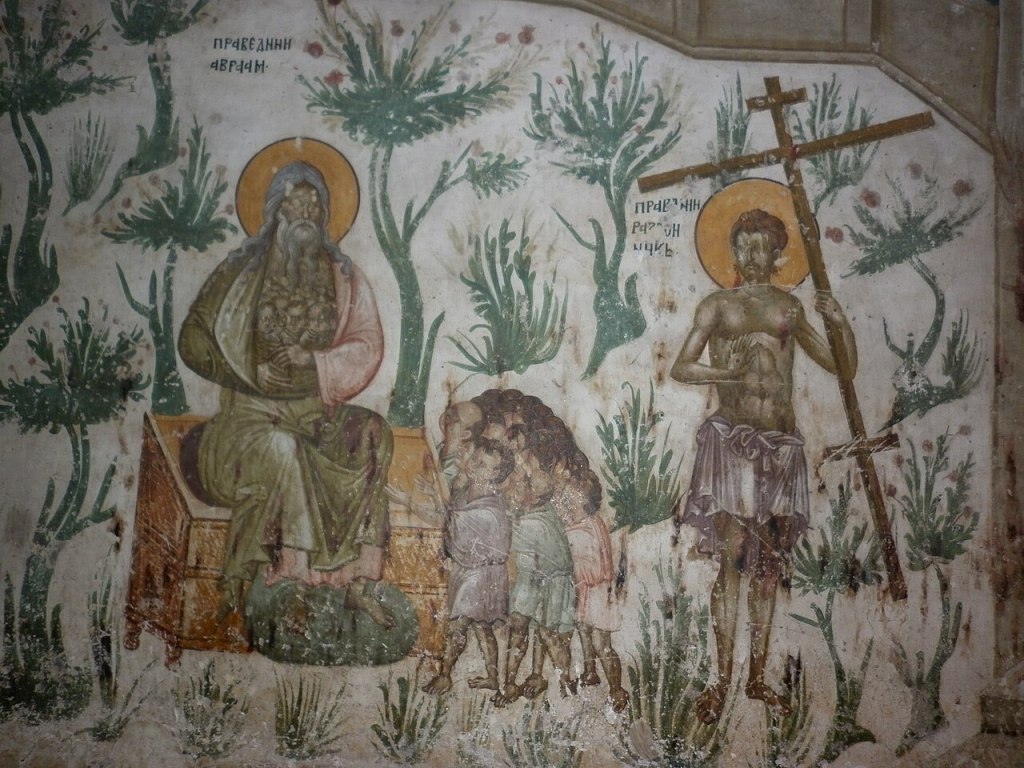
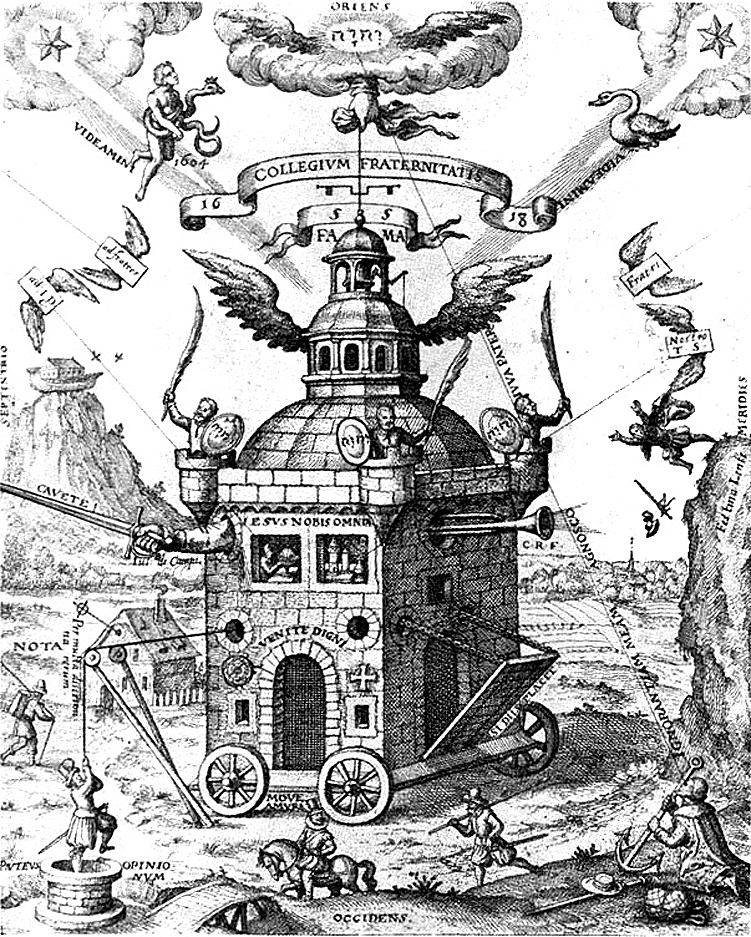
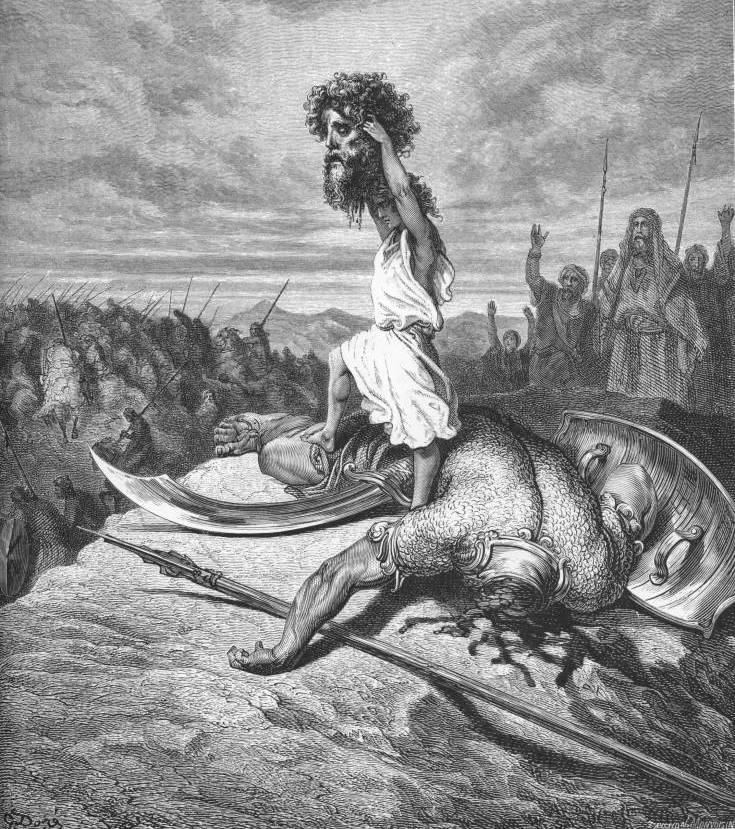
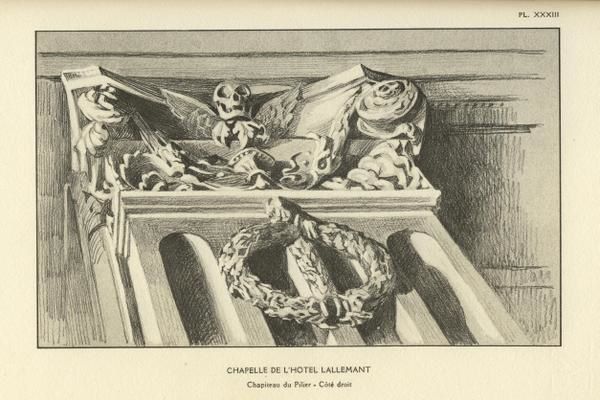
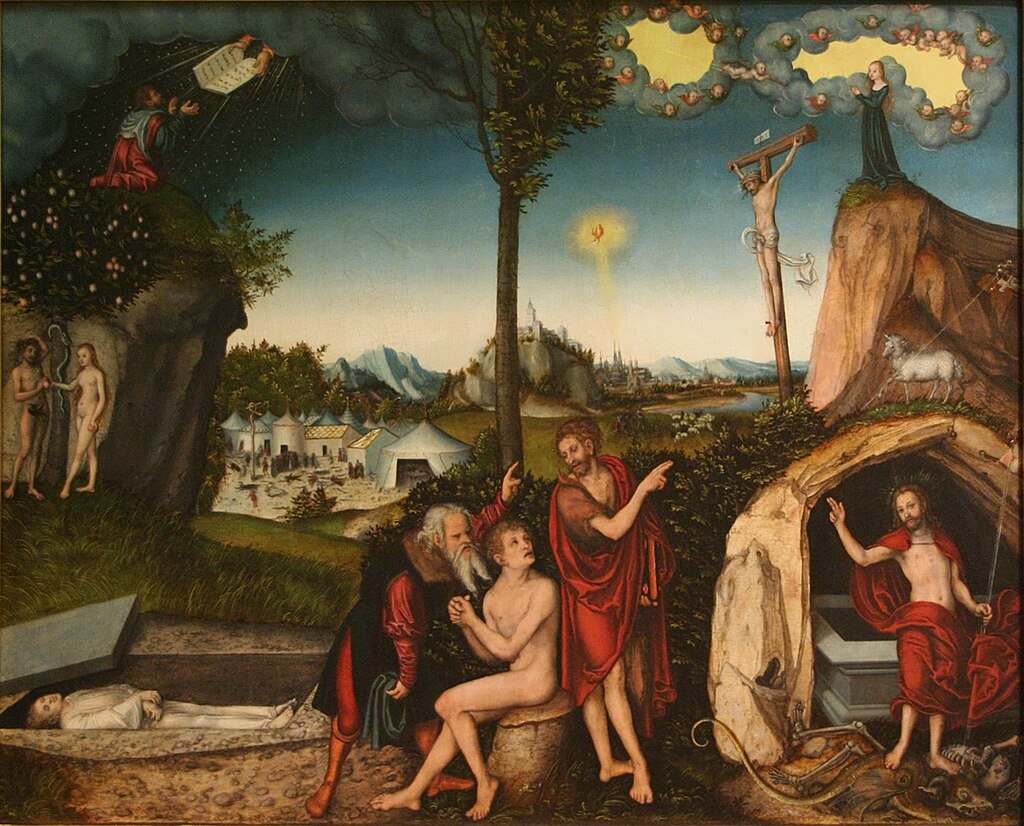
 sonsofscience.org